

Fetal Alcohol Spectrum Disorders (FASD) constitute a group of lifelong conditions that arise as a consequence of prenatal alcohol exposure (PAE). It is crucial to understand that FASD is not a single diagnosis but rather an umbrella term describing a wide range of adverse developmental effects.
Preventability and Impact
A critical aspect of FASD is its complete preventability. These disorders result solely from the exposure of a developing fetus to alcohol; therefore, abstaining from alcohol consumption during pregnancy eliminates the risk. FASD represents a leading known preventable cause of birth defects and intellectual and neurodevelopmental disabilities globally. The consequences of PAE are profound and lifelong, encompassing a constellation of physical abnormalities, cognitive deficits, behavioral challenges, and learning disabilities that impact individuals, their families, and society.
Defining the Spectrum: FASD Conditions
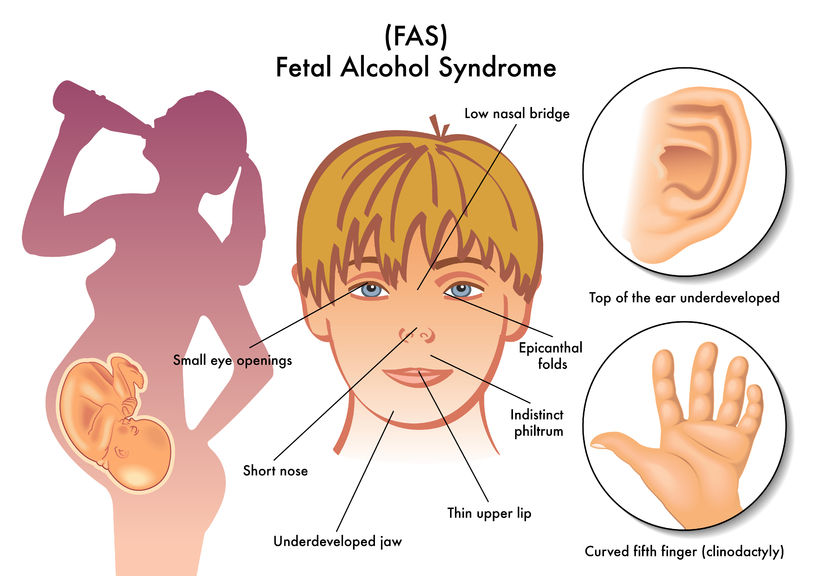
Fetal Alcohol Spectrum Disorders (FASD) encompass a range of diagnoses that result from prenatal alcohol exposure (PAE). These conditions vary in their presentation and severity, reflecting the complex interplay between the timing and amount of alcohol exposure and other genetic and environmental factors. The primary conditions recognized under the FASD umbrella include:
Fetal Alcohol Syndrome (FAS)
FAS is considered the most severe and clinically distinct diagnosis within the FASD spectrum. It is characterized by a specific constellation of features across three domains: (1) a characteristic pattern of facial abnormalities, (2) growth deficiency (prenatal and/or postnatal), and (3) central nervous system (CNS) abnormalities, which can be structural, neurological, or functional. Individuals with FAS often experience significant challenges with learning, memory, attention, communication, and sensory processing.
Partial Fetal Alcohol Syndrome (pFAS)
pFAS is diagnosed when an individual exhibits some, but not all, of the diagnostic criteria for FAS. Typically, a diagnosis of pFAS requires confirmed PAE, the presence of at least two of the characteristic facial features, and evidence of either growth deficiency or CNS abnormalities. Some diagnostic systems consider pFAS relatively uncommon.
Alcohol-Related Neurodevelopmental Disorder (ARND)
ARND primarily involves neurodevelopmental impairments resulting from PAE, in the absence of the full facial phenotype or significant growth deficits seen in FAS. Diagnosis requires confirmation of PAE and evidence of CNS dysfunction, manifesting as intellectual disabilities, learning problems (particularly in mathematics), memory deficits, attention difficulties, impaired judgment, and poor impulse control. Due to the reliance on identifying functional deficits, ARND is typically not diagnosed before the age of three.
Neurobehavioral Disorder Associated with Prenatal Alcohol Exposure (ND-PAE)
ND-PAE is a diagnostic category recognized in the Diagnostic and Statistical Manual of Mental Disorders, Fifth Edition (DSM-5) as a condition requiring further study. It necessitates confirmed PAE exceeding minimal levels (defined as more than 13 alcoholic drinks per month of pregnancy or more than 2 alcoholic drinks in one sitting). The core features are impairments in three functional domains: (1) neurocognition (e.g., executive function, memory, learning), (2) self-regulation (e.g., mood regulation, attention, impulse control), and (3) adaptive functioning (e.g., communication, social skills, daily living skills). Importantly, ND-PAE does not require the presence of FAS facial features or growth deficits.
Alcohol-Related Birth Defects (ARBD)
ARBD refers to congenital physical anomalies resulting from confirmed PAE. These typically involve problems with the heart, kidneys, bones, vision, or hearing. Individuals diagnosed with ARBD do not necessarily exhibit the neurobehavioral impairments characteristic of other FASD conditions, and ARBD is often diagnosed concurrently with other FASD categories rather than in isolation.
Outdated Terminology: Fetal Alcohol Effects (FAE)
It is important to note that the term Fetal Alcohol Effects (FAE) is considered outdated and is no longer used in current diagnostic practices. It was previously used to describe individuals with PAE who showed some effects but did not meet the full criteria for FAS. The diagnostic categories of pFAS and ARND now encompass these presentations more accurately.
The existence of multiple diagnostic systems (e.g., Institute of Medicine [IOM] criteria, the 4-Digit Diagnostic Code, Canadian guidelines, Hoyme guidelines, DSM-5 ND-PAE) with varying criteria and nomenclature contributes significantly to the complexity of the FASD field. For instance, the requirement for growth deficiency or the specific number of facial features needed for diagnosis differs between systems. This lack of a single, globally accepted standard hinders consistent diagnosis, complicates the comparison of research findings, and impacts the equitable provision of services worldwide.
FASD Spectrum Conditions Summary
| Condition | PAE Confirmation Required? | Characteristic Facial Features (≥2 or 3 required) | Growth Deficit (≤10th %ile) | CNS Abnormality (Structural/Neurological/Functional) | Primary Domain Affected |
| Fetal Alcohol Syndrome (FAS) | No (if face present) | Yes (Smooth Philtrum, Thin Vermilion, Short PFs) | Yes | Yes | Physical, Neurodevelopmental, Behavioral |
| Partial Fetal Alcohol Syndrome (pFAS) | Yes | Yes (Some, typically ≥2) | Yes OR No | Yes OR No (must have either Growth or CNS deficit) | Physical, Neurodevelopmental, Behavioral |
| Alcohol-Related Neurodevelopmental Disorder (ARND) | Yes | No | No | Yes (Functional/Structural) | Neurodevelopmental, Behavioral (Cognitive, Learning, Attention, Judgment, Impulse Control) |
| Neurobehavioral Disorder Assoc. w/ PAE (ND-PAE) (DSM-5) | Yes (> minimal) | No | No | Yes (Functional: Neurocognition, Self-Regulation, Adaptive Functioning) | Neurobehavioral (Thinking, Memory, Behavior, Daily Living) |
| Alcohol-Related Birth Defects (ARBD) | Yes | No | No | No (Primary deficit is physical) | Physical (Congenital anomalies: Heart, Kidneys, Bones, Vision, Hearing) |
Diagnostic Criteria for Fetal Alcohol Syndrome (FAS)
Fetal Alcohol Syndrome (FAS) represents the most distinctly recognizable condition within the FASD spectrum, defined by a specific pattern of physical and neurodevelopmental abnormalities. While diagnostic guidelines vary slightly, the core diagnosis generally hinges on the presence of abnormalities across three key domains: facial dysmorphology, growth deficiency, and central nervous system (CNS) dysfunction, often in the context of known or suspected prenatal alcohol exposure (PAE).
Cardinal Facial Features
A specific pattern of three facial features is considered highly characteristic of FAS. The presence of these features is a cornerstone of the diagnosis in most systems:
- Short Palpebral Fissures: This refers to small eye openings, measured horizontally from the inner to the outer corner. Diagnosis typically requires a measurement at or below the 10th percentile, or 2 standard deviations (SD) below the mean, adjusted for age and racial norms where possible.
- Smooth Philtrum: The philtrum is the vertical groove between the base of the nose and the upper lip. In FAS, this groove is indistinct or flat. Standardized 5-point pictorial lip-philtrum guides are often used for assessment, with a rank of 4 or 5 indicating significant smoothness consistent with FAS. It is important to note that different diagnostic systems may use slightly different guides (e.g., 4-Digit Code vs. Hoyme guides), which can impact assessment.
- Thin Vermilion Border (Upper Lip): The vermilion border is the colored portion of the lip. In FAS, the upper lip is notably thin. This is also typically assessed using a 5-point lip-philtrum guide, with ranks 4 or 5 indicating significant thinness. As with the philtrum, the specific guide used can influence rating.
Most diagnostic guidelines require the presence of at least two, and often all three, of these cardinal features for an FAS diagnosis. Some systems, like the Hoyme guidelines, have relaxed this requirement to only two features. Clinicians should be aware that these facial features can become less pronounced with age, particularly after puberty, potentially complicating diagnosis in older individuals without access to childhood photographs or records.
Growth Deficits
Impaired growth is another key diagnostic criterion for FAS.
- Metrics: This is typically defined as height and/or weight falling at or below the 10th percentile for the individual’s age, sex, and gestational age, with adjustments for race or ethnicity when appropriate norms are available.
- Timing: Growth deficiency can manifest prenatally (low birth weight/length for gestational age) or become apparent postnatally. While characteristic of FAS in childhood, these growth deficits may not always persist into adulthood. Notably, some recent diagnostic guidelines, such as the Canadian and Australian systems, have removed growth deficiency as a mandatory criterion for FASD diagnoses.
Central Nervous System (CNS) Abnormalities
Evidence of CNS dysfunction is a mandatory criterion for FAS. This can be established through findings in one or more of the following areas:
- Structural Abnormalities: This includes microcephaly, defined as a head circumference at or below the 10th percentile (or sometimes ≤3rd percentile, equivalent to ≥2 SD below the mean). Other significant structural anomalies identified through neuroimaging (MRI, CT) can also fulfill this criterion, such as agenesis or hypoplasia of the corpus callosum, cerebellar hypoplasia (especially of the vermis), or abnormalities in the basal ganglia.
- Neurological Abnormalities: This category includes “hard” signs like epilepsy or other seizure disorders (not attributable to postnatal injury or fever) or “soft” neurological signs such as impaired motor skills, poor coordination, or sensory integration problems.
- Functional Deficits: This is often the most complex area to assess and involves demonstrating significant impairment (typically defined as performance ≥1.5 or ≥2 SD below the mean on standardized tests) in multiple neurobehavioral domains relative to age, developmental level, and cultural background. Key domains frequently affected include:
- Global Cognitive Function: Low overall IQ or significant developmental delay.
- Executive Function: Deficits in planning, organization, working memory, inhibition, judgment, and cognitive flexibility.
- Learning and Memory: Difficulties acquiring and retrieving information.
- Attention and Hyperactivity: Problems with sustained attention, distractibility, and hyperactivity/impulsivity (often meeting criteria for ADHD).
- Social Communication and Interaction: Difficulties understanding social cues, maintaining relationships, and using language appropriately.
- Adaptive Functioning: Impairment in practical, everyday skills necessary for independent living (e.g., self-care, managing money, safety awareness).
The Lifelong Impact of FASD: Manifestations Across Development

Fetal Alcohol Spectrum Disorders (FASD) result in impairments that typically emerge during infancy or childhood and persist across the entire lifespan, presenting evolving challenges as individuals navigate different developmental stages. The specific manifestations and their severity vary considerably among individuals, influenced by factors such as the pattern of prenatal alcohol exposure (PAE), genetics, and the postnatal environment.
Infancy (0-3 years)
Early life signs can be indicators of PAE and potential FASD.
- Physical Manifestations: Infants may present with low birth weight and/or length, microcephaly (small head circumference), and potentially the characteristic facial features of FAS (smooth philtrum, thin upper lip, short palpebral fissures). Functional difficulties include problems with sleep regulation and sucking, feeding difficulties leading to failure to thrive, and increased jitteriness or irritability.
- Developmental Concerns: Global developmental delays are common, with infants potentially taking longer to reach key motor and language milestones such as sitting, walking, and talking. Early signs of sensory processing difficulties may also be observed.
Childhood (approx. 4-12 years)
As children enter school age, cognitive, learning, and behavioral challenges often become more apparent.
- Physical Development: Growth deficits in height and weight may persist, although some children experience catch-up growth. Poor coordination and balance issues are common. Vision and hearing problems may be identified during this period. The characteristic facial features, if present initially, may become less distinct as the child grows.
- Cognitive and Learning Challenges: Learning disabilities are prevalent, with particular difficulties often noted in mathematics. Memory impairments (both short-term and long-term recall) are frequently reported. Difficulties with attention, concentration, and focus are hallmarks. Speech and language development may be delayed or disordered. Abstract reasoning, problem-solving, and judgment skills are often impaired.
- Behavioral and Social Difficulties: Hyperactivity and impulsivity are common behavioral features. Children often struggle with social skills, leading to difficulties in forming and maintaining peer relationships. Adapting to changes in routine or transitioning between activities can be challenging. Poor emotional regulation can manifest as frequent tantrums or mood swings.
Adolescence and Adulthood
The underlying neurodevelopmental deficits associated with FASD persist into adolescence and adulthood, often manifesting as significant challenges in navigating the increasing complexities of life. As societal expectations for independence rise, the impact of FASD on daily functioning becomes more pronounced.
- Physical Health: While some earlier physical issues like growth deficits may normalize, others like vision, hearing, or organ system problems (heart, kidney, bone) can persist. Research suggests an increased risk for metabolic problems such as Type 2 diabetes and abnormal cholesterol levels in adulthood.
- Cognitive Functioning: Deficits in executive functions remain a core challenge, impacting planning, organization, working memory, impulse control, and judgment. Difficulties with abstract thinking, memory, and academic skills often continue, impacting higher education and employment prospects. Understanding cause-and-effect and long-term consequences can be particularly difficult.
- Behavioral, Social, and Adaptive Functioning: These persistent cognitive challenges contribute to significant difficulties in adaptive living. Many adults with FASD struggle with independent living, obtaining and maintaining employment, and managing finances. Social interaction difficulties persist, impacting relationships. Poor judgment and impulsivity can lead to vulnerability to manipulation and victimization. This combination of factors increases the risk for secondary conditions, including mental health disorders like depression and anxiety, substance use disorders, and involvement with the criminal justice system. The brain-based nature of FASD means these are not issues of willpower but reflect underlying neurological differences requiring lifelong, adaptive support.
Prevalence of FAS and FASD
Determining the precise prevalence of FAS and FASD presents significant challenges globally. Diagnosis itself is complex, requiring multidisciplinary expertise and careful assessment across physical, neurological, and behavioral domains. Compounding this is the difficulty in obtaining accurate histories of PAE, often due to maternal recall issues, reluctance to disclose owing to social stigma or fear of consequences, or lack of information in cases involving adoption or foster care.
Furthermore, prevalence estimates vary widely depending on the methodology employed. Studies relying on passive surveillance systems (e.g., medical record reviews, birth defect registries) tend to yield lower estimates than those using active case ascertainment methods, which involve direct, in-person examination of children within a defined population, often in school settings. Active case ascertainment is considered more likely to capture the full spectrum of FASD, including less physically obvious forms like ARND and ND-PAE.
Global Prevalence Estimates
Despite challenges, research provides important estimates:
- FASD: A significant meta-analysis estimated the global prevalence of FASD among children and youth in the general population to be approximately 7.7 per 1,000 population (roughly 0.8%), with a 95% confidence interval (CI) of 4.9–11.7 per 1,000. Other analyses suggest the prevalence likely exceeds 1% (10 per 1,000) in at least 76 countries. It has also been estimated that approximately 1 out of every 13 pregnant women who consume alcohol during pregnancy will deliver a child with FASD.
- FAS: Global estimates for FAS, the most severe form, range from approximately 0.2 to 9 per 1,000 live births, with meta-analyses suggesting figures around 1.5 to 2.9 per 1,000.
- Regional Variation: Prevalence varies significantly by region. The WHO European Region shows the highest estimated FASD prevalence (19.8 per 1,000; 95% CI: 14.1–28.0), while the Eastern Mediterranean Region has the lowest (0.1 per 1,000; 95% CI: 0.1–0.5). Extremely high rates have been reported in specific communities, particularly in South Africa (up to 111.1 per 1,000). Other countries with notably high estimated prevalence include Croatia (53.3 per 1,000) and Ireland (47.5 per 1,000).
United States Prevalence Estimates
Active case ascertainment studies in the US provide the most robust estimates:
- FASD: Studies involving in-person assessment of school-aged children suggest FASD prevalence ranges from 1.1% to 5.0% (11 to 50 per 1,000) in various US communities. This aligns with statements that up to 1 in 20 US school children may have an FASD.
- FAS: Estimates for FAS vary based on methodology. Record-based studies suggest rates around 0.3 to 1 per 1,000 children or live births. However, studies using in-person assessment yield higher estimates, typically ranging from 2 to 9 per 1,000 children.
European Prevalence Estimates
- FASD: As noted, the WHO European Region has the highest estimated regional prevalence (19.8 per 1,000). The estimate of 1% to 5% (10 to 50 per 1,000) derived from US studies is also suggested to apply to some Western European countries. High rates of PAE in countries like the UK, Denmark, and Ireland suggest potentially high but often unmeasured FASD prevalence.
- FAS: Italy has been cited with a high FAS prevalence (8.0 per 1,000), and Croatia also shows high rates.
Prevention of FASD
Given that FASD is entirely preventable by avoiding alcohol consumption during pregnancy, prevention strategies are paramount. Effective prevention requires a multi-pronged approach involving public health messaging, clinical screening and intervention, and supportive policies.
Public Health Messaging and Awareness
Raising awareness among the general population, particularly women of childbearing age and their partners, about the risks of PAE is fundamental.
- Core Message: The central message must be clear and consistent: there is no known safe amount, type, or time to drink alcohol during pregnancy. Abstinence is the safest choice for those who are pregnant or might become pregnant.
- Addressing Stigma: Prevention messages must be carefully framed to avoid stigmatizing women who use alcohol. Shaming approaches are ineffective and can deter women from seeking help or disclosing alcohol use. Focusing on positive messages about healthy pregnancies and providing non-judgmental support is more effective.
- Consistency and Coordination: Conflicting messages from various sources (media, family, even healthcare providers) can undermine prevention efforts. Coordinated messaging across public health agencies, healthcare systems, and community organizations is crucial.
- Channels: Awareness campaigns can utilize various channels, including media campaigns, educational materials in clinics and schools, community events, and online resources. International FASD Awareness Day (September 9th) and Month provide focused opportunities. Movements like “Red Shoes Rock” aim to increase visibility.
Screening and Brief Intervention (SBI) in Clinical Settings
Healthcare providers play a critical role in identifying women at risk and intervening early.
- Universal Screening: Recommendations often call for universal screening of all women of childbearing age, especially pregnant women, for alcohol use using validated tools. This should be a routine part of prenatal care and general wellness visits.
- Brief Intervention (BI): For women identified as drinking at risky levels, brief intervention (BI) – short counseling sessions – has proven effective in reducing alcohol consumption. This involves providing feedback on screening results, discussing risks non-judgmentally, exploring readiness to change, and collaboratively setting goals for reduction or abstinence.
- Referral to Treatment (RT): Women with more severe alcohol use patterns or Alcohol Use Disorder (AUD) should be referred to specialized treatment services.
- Implementation Challenges: Despite evidence of effectiveness, alcohol SBI is underutilized. Barriers include lack of provider training, time constraints, discomfort discussing alcohol use, and concerns about stigma. Initiatives like the CDC’s Collaborative for Alcohol-Free Pregnancy aim to improve provider education and implementation.
- Contraception Counseling: Integrating discussions about alcohol use with contraception counseling is vital, particularly for women not planning pregnancy but engaging in risky drinking, to prevent unintended alcohol-exposed pregnancies.
Alcohol Warning Labels
Mandatory or voluntary warning labels on alcoholic beverage containers advising against consumption during pregnancy are used in several countries (e.g., US, France, Australia, proposed in Canada).
- Effectiveness: Evidence on the effectiveness of warning labels alone in changing drinking behavior, especially among heavier drinkers, is mixed and often limited. Some studies suggest labels increase awareness and may influence low-risk drinkers or stimulate conversations about PAE risks. Well-designed labels (e.g., clear text, pictograms, prominent placement) appear more effective. A Canadian trial showed decreased consumption in a region with labels.
- Limitations: Labels may not be seen when drinks are served outside the original container (e.g., bars). Messaging is limited by space, and poorly designed labels may increase guilt without changing behavior.
- Role: Warning labels are generally viewed as one component of a broader, comprehensive prevention strategy, rather than a standalone solution.
Policy and Support Systems
Broader policies and support systems are essential for effective FASD prevention.
- Alcohol Control Policies: Population-level measures that reduce overall alcohol consumption, such as increased alcohol taxes, minimum unit pricing, restrictions on alcohol availability (outlet density, hours/days of sale), and marketing restrictions, contribute indirectly to FASD prevention by reducing overall exposure risk.
- Support for Women: Providing accessible, non-stigmatizing support and treatment for women with AUD or who struggle to abstain during pregnancy is crucial. This includes addressing underlying factors contributing to alcohol use, such as trauma, mental health issues, poverty, and lack of social support.
- National Strategies: Coordinated national strategies or frameworks, like those implemented or proposed in Canada and Australia, or legislation like the FASD Respect Act in the US, aim to integrate prevention, diagnosis, research, and support services.
Fetal Alcohol Spectrum Disorders represent a significant and entirely preventable global public health challenge. Caused by prenatal exposure to alcohol, FASD encompasses a range of lifelong physical, cognitive, behavioral, and adaptive functioning deficits, with Fetal Alcohol Syndrome (FAS) being the most severe and recognizable form. Diagnosis, particularly for conditions other than classic FAS, remains complex due to varied diagnostic criteria across systems and the frequent absence of pathognomonic facial features in the majority of affected individuals. This contributes to substantial under-diagnosis, hindering access to necessary supports.
