
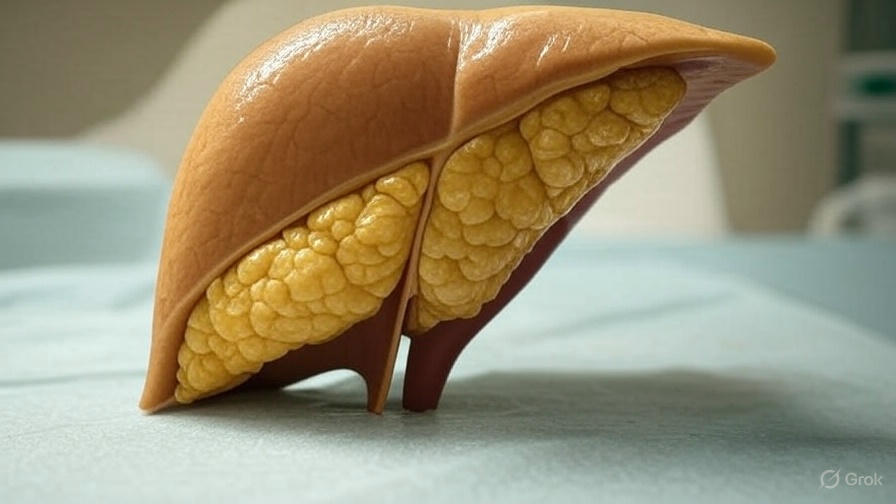
Steatotic Liver Disease (SLD) is an increasingly recognized global health concern, characterized by the abnormal accumulation of fat (steatosis) within liver cells, known as hepatocytes. A common diagnostic threshold is the presence of lipid deposition in more than 5% of hepatocytes. The condition exists on a wide spectrum, ranging from simple fat accumulation to severe liver damage, and its understanding is critical for public health strategies and patient management.
Defining the Spectrum: From Steatosis to Cirrhosis and Hepatocellular Carcinoma (HCC)
The clinical course of SLD can vary significantly among individuals, progressing through several stages of increasing severity:
- Simple Steatosis (Fatty Liver): This initial stage involves the mere presence of excess fat in liver cells without significant accompanying inflammation or cellular injury. While often considered a relatively benign condition, simple steatosis is not inert and possesses the potential to advance to more severe forms of liver disease if underlying causative factors are not addressed.
- Steatohepatitis: This stage is marked by the accumulation of fat along with active liver inflammation and damage to hepatocytes, often manifesting as cellular ballooning. Steatohepatitis is a more aggressive form of SLD and is a key driver for the development of liver fibrosis.
- Fibrosis: In response to chronic inflammation and ongoing liver cell injury, scar tissue begins to form and accumulate within the liver. The extent of fibrosis is a critical determinant of long-term prognosis in patients with SLD, with more advanced fibrosis correlating with higher risks of liver-related complications and mortality.
- Cirrhosis: This represents an advanced and often irreversible stage of liver scarring, where normal liver tissue is extensively replaced by fibrous tissue and regenerative nodules. This architectural distortion severely impairs liver function and can lead to life-threatening complications such as portal hypertension, ascites, variceal bleeding, and hepatic encephalopathy. Interestingly, once cirrhosis develops, the visible fat within the liver may diminish or even disappear in histological examinations, a phenomenon sometimes referred to as “burned out fatty liver” or cryptogenic cirrhosis. This observation is significant because the initial trigger (fat) may no longer be apparent, yet the severe structural damage and its consequences persist.
- Hepatocellular Carcinoma (HCC): HCC is a primary cancer of the liver that can arise in patients with cirrhosis due to SLD. Notably, MASH (Metabolic Dysfunction-Associated Steatohepatitis) is increasingly recognized as a cause of HCC, and in some instances, HCC can develop even in the absence of established cirrhosis, particularly in the context of MASH. MASLD (Metabolic Dysfunction-Associated Steatotic Liver Disease) is now a rapidly growing indication for HCC.
The progression through this spectrum underscores the importance of early detection and intervention to halt or reverse liver damage before it reaches advanced, less manageable stages.
Evolving Nomenclature: NAFLD, ALD, MASLD, MASH, MetALD
The terminology used to describe fatty liver conditions has undergone significant evolution to better reflect the underlying causes and associated metabolic dysfunctions, and to reduce patient stigma.
Historically, FLD was broadly divided into:
- Non-Alcoholic Fatty Liver Disease (NAFLD): Characterized by hepatic steatosis in individuals with little to no alcohol consumption.
- Alcohol-Related Liver Disease (ALD) or Alcoholic Liver Disease: Liver damage primarily driven by excessive alcohol intake.
Recent consensus has led to a more nuanced classification:
- Metabolic Dysfunction-Associated Steatotic Liver Disease (MASLD): This term now replaces NAFLD. The diagnosis of MASLD requires the presence of hepatic steatosis (typically >5% of hepatocytes) along with at least one of five predefined cardiometabolic risk factors (CMRFs). This change emphasizes a “positive” diagnosis based on metabolic drivers rather than a diagnosis of exclusion.
- Metabolic Dysfunction-Associated Steatohepatitis (MASH): This term replaces NASH (Nonalcoholic Steatohepatitis). MASH represents the more aggressive form of MASLD, characterized by steatosis, lobular inflammation, and hepatocyte ballooning (injury), with or without fibrosis.
- MetALD (MASLD and increased alcohol intake): A new category was introduced to describe individuals who meet the criteria for MASLD but also consume alcohol in amounts exceeding 140 grams per week for females and 210 grams per week for males. This acknowledges the common clinical scenario where metabolic risk factors coexist with significant alcohol consumption, potentially leading to synergistic liver damage.
- Alcohol-Related Liver Disease (ALD): This term (sometimes Alcohol-Associated Liver Disease) is retained for liver disease where excessive alcohol consumption is the predominant etiological factor.
- Steatotic Liver Disease (SLD): This overarching term is used to encompass all these conditions characterized by hepatic steatosis.
Alcohol and Steatotic Liver Disease
Alcohol consumption has long been recognized as a major cause of liver disease. Its interaction with the spectrum of SLD is complex, ranging from being the primary driver in Alcohol-Related Liver Disease (ALD) to a significant modifying factor in individuals with underlying metabolic risks (MetALD).
Alcohol-Related Liver Disease (ALD)
ALD, also referred to as alcohol-associated liver disease to reduce stigma, encompasses a range of liver injuries caused by excessive alcohol consumption. The risk and severity of ALD are generally dose-dependent, related to the quantity and duration of alcohol use.
- Spectrum of ALD: Similar to MASLD, ALD presents as a spectrum:
- Alcoholic Steatosis (Fatty Liver): This is the earliest and most common response to heavy alcohol intake, developing in over 90% of individuals who drink heavily. It is characterized by fat accumulation (macrovesicular steatosis) in hepatocytes. This stage is often reversible with alcohol abstinence. Symptoms, if present, may include right upper quadrant discomfort, fatigue, and weakness.
- Alcoholic Steatohepatitis (ASH) / Acute Alcoholic Hepatitis (AH): A more severe form involving liver inflammation, hepatocyte injury (ballooning, necrosis), and often the presence of Mallory-Denk bodies, in addition to steatosis. AH refers to an acute clinical syndrome often superimposed on chronic ALD, characterized by jaundice, fever, tender hepatomegaly, and elevated liver enzymes (typically AST > ALT, with an AST/ALT ratio >1.5 or 2, and AST usually <300-400 IU/L). Severe AH carries a high short-term mortality rate. ASH can also be reversible with abstinence if fibrosis is not advanced.
- Alcoholic Fibrosis and Cirrhosis: Persistent alcohol abuse and chronic steatohepatitis can lead to progressive liver fibrosis and ultimately cirrhosis. Approximately 10-20% of long-term heavy drinkers develop cirrhosis. Alcoholic cirrhosis is a major cause of liver-related morbidity and mortality and a risk factor for HCC.
- Mechanisms of Alcohol-Induced Liver Damage: Alcohol exerts its damaging effects on the liver through multiple interconnected pathways:
- Ethanol Metabolism and Toxic Byproducts: The liver is the primary site of alcohol metabolism.
- Oxidative Stress: The metabolism of alcohol generates a substantial amount of ROS, overwhelming the liver’s antioxidant defenses. This oxidative stress damages cellular components (lipids, proteins, DNA), impairs mitochondrial function, and promotes inflammation and cell death.
- Inflammation: Alcohol and its metabolites trigger inflammatory responses in the liver. This involves the activation of Kupffer cells (resident liver macrophages) and the recruitment of other immune cells, leading to the release of pro-inflammatory cytokines (e.g., TNF-α, IL-6, IL-8) and chemokines, which perpetuate liver injury and promote fibrosis.
- Disruption of Lipid Metabolism: Alcohol consumption significantly alters hepatic lipid metabolism. It increases de novo lipogenesis, enhances the mobilization of fatty acids from adipose tissue to the liver, and impairs fatty acid oxidation and the secretion of VLDL. This leads to the accumulation of triglycerides in hepatocytes (steatosis).
- Gut-Liver Axis Disruption: Chronic alcohol use increases intestinal permeability (“leaky gut”), allowing bacterial endotoxins (like LPS) to translocate from the gut into the portal circulation. These endotoxins activate TLR4 on Kupffer cells and other liver cells, further stimulating inflammatory pathways and contributing to ALD progression.
- Fibrogenesis: Chronic liver injury and inflammation stimulate hepatic stellate cells (HSCs) to transform into myofibroblasts, which are the primary cells responsible for producing excessive extracellular matrix proteins (collagen), leading to fibrosis and cirrhosis. Acetaldehyde and ROS directly activate HSCs.
- Alcohol Consumption Thresholds for ALD:
The amount of alcohol that causes liver damage varies among individuals due to genetic factors, sex, nutritional status, and co-existing liver conditions. There is likely a threshold effect, but a universally “safe” level of alcohol consumption that poses no risk to liver health is debated, with some organizations like the WHO stating no level is entirely without health risk.
- NIAAA defines “at-risk” (heavy) drinking as >14 standard drinks/week or >4 drinks/day for men, and >7 standard drinks/week or >3 drinks/day for women. (A standard drink in the U.S. contains about 14 grams of alcohol).
- Some diagnostic criteria for alcoholic hepatitis cite long-term consumption of >40 g/day for women or >60 g/day for men for 6 months.
- Women are generally more susceptible to ALD than men, developing liver disease at lower cumulative exposure to alcohol and with more rapid progression. This may be due to differences in alcohol metabolism (e.g., lower gastric ADH activity in women) and body composition.
- Binge drinking (consuming enough alcohol to reach a blood alcohol concentration of 0.08 g/dL, typically after 4 drinks for women and 5 for men in about 2 hours) also increases the risk of ALD, including acute alcoholic hepatitis. It is important to note that even alcohol consumption below these “heavy” drinking thresholds can contribute to liver disease, especially in the presence of other risk factors like obesity or viral hepatitis.
MetALD: The Intersection of Metabolic Dysfunction and Alcohol Intake
MetALD is a newly defined category for individuals who meet the diagnostic criteria for MASLD (hepatic steatosis plus at least one cardiometabolic risk factor) and also consume alcohol at levels considered to be increased or “at-risk” but below the typical thresholds for a primary diagnosis of ALD.
- Diagnostic Criteria for MetALD:
- Presence of hepatic steatosis.
- Presence of at least one of the five cardiometabolic risk factors required for MASLD diagnosis (see Table 2).
- Weekly alcohol consumption of >140 grams but $\leq$350 grams for females (average daily 20-50g), OR >210 grams but $\leq$420 grams for males (average daily 30-60g). (Note: Some sources use slightly different thresholds, e.g., suggests >30-60 g/
